
The Futures We Gather Around: Reflections from Parable of the Trickster: An Octavia E. Butler Celebration at LAPL
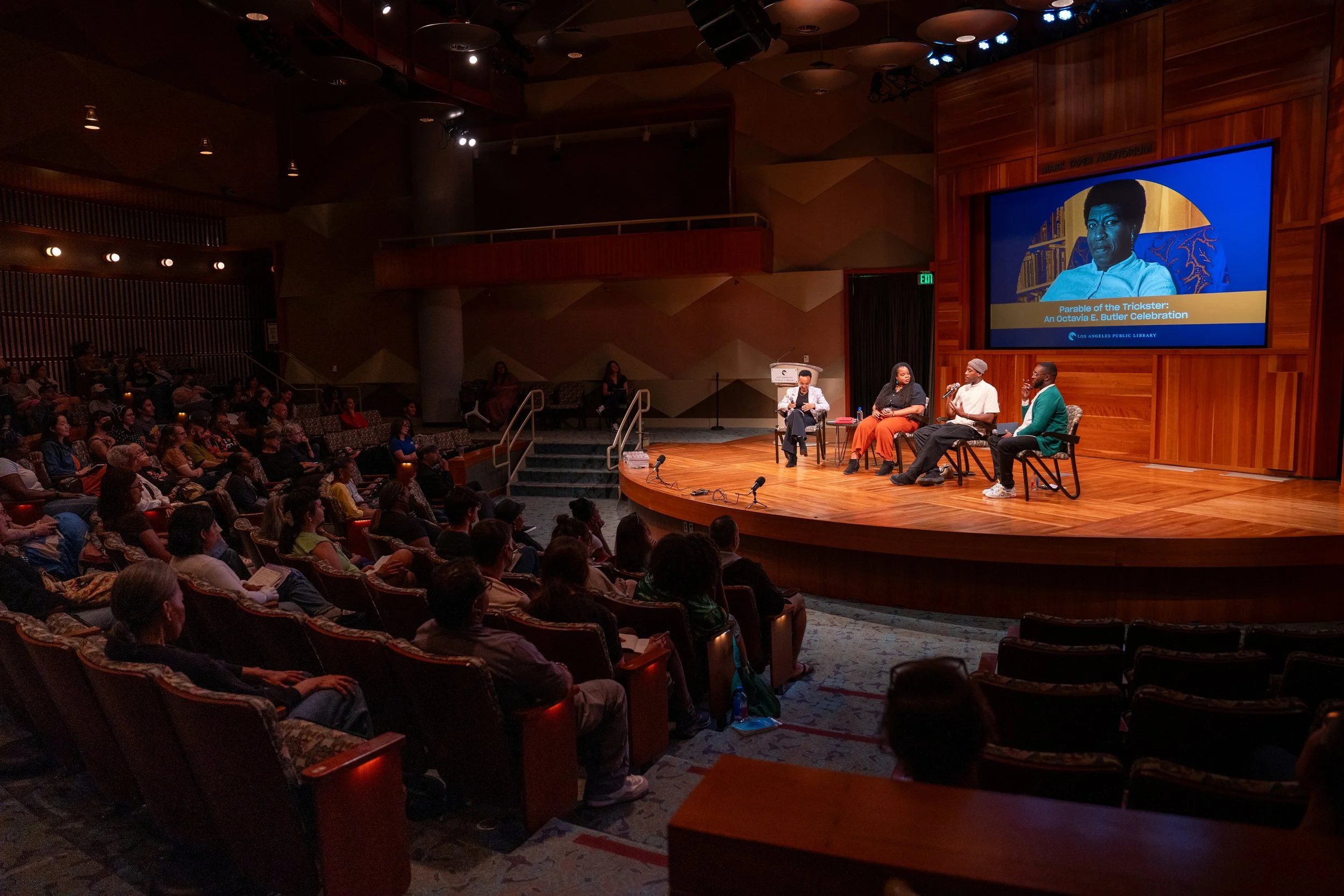
On a Saturday morning in downtown Los Angeles, hundreds of people gathered not around the release of a new book, but around one that was never written.
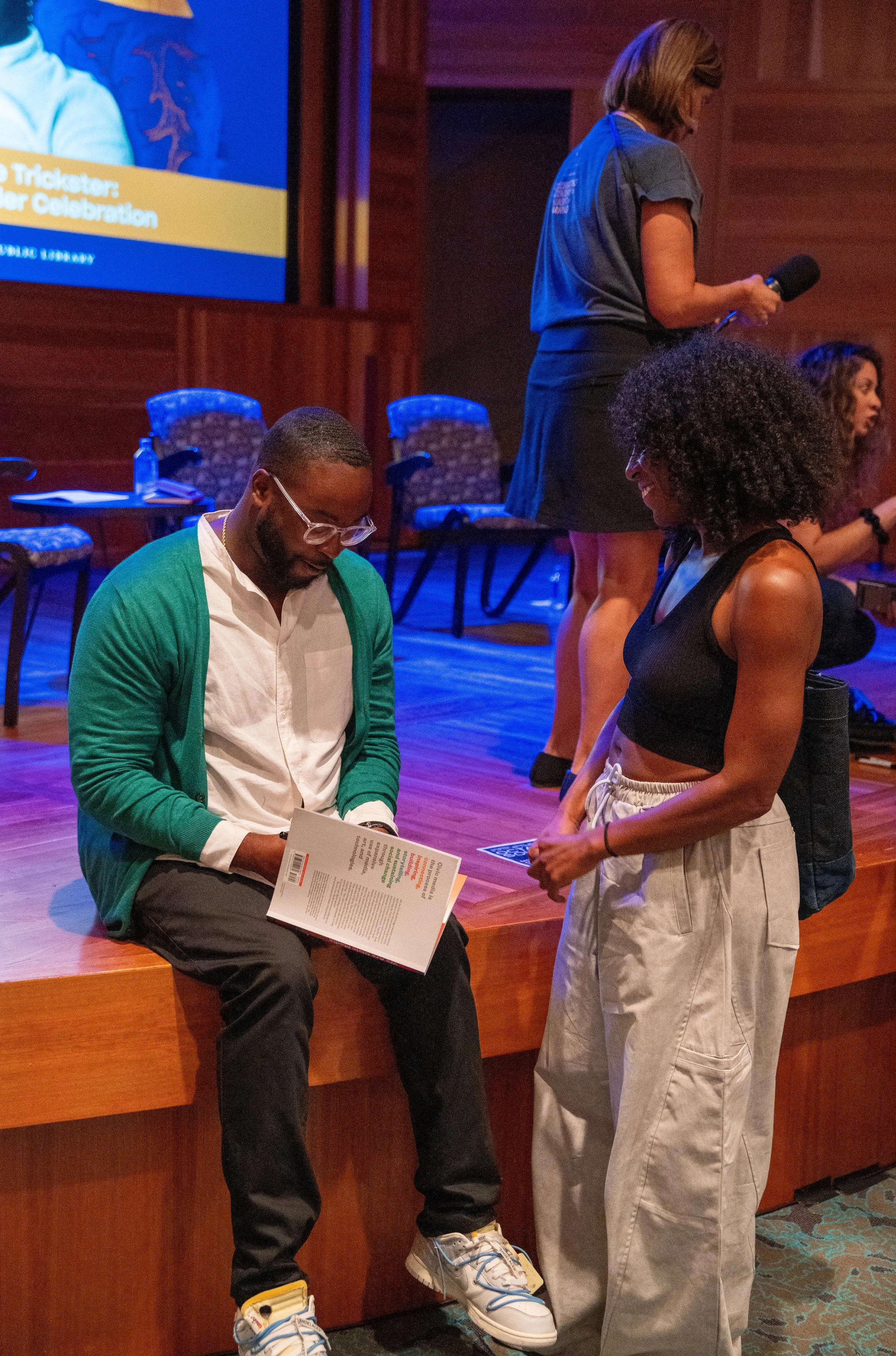
At the Los Angeles Public Library's Parable of the Trickster: An Octavia E. Butler Celebration, scholars, artists, designers, theologians, gamers, and community members assembled to explore the enduring influence of Octavia E. Butler's unfinished third Earthseed novel. It is a remarkable premise when you stop to consider it: an unfinished manuscript has become a catalyst for public imagination.
Before the conversation began, our panel gathered at The Huntington to spend time with the Octavia E. Butler Archive. Surrounded by Butler's handwritten notes, manuscripts, correspondence, research files, and unfinished drafts, we encountered something deeper than source material—we encountered process. We met Octavia Butler at work.
The archive reminded us that imagination is not spontaneous. It is disciplined. It is researched. It is revised. Long before Butler imagined new worlds, she carefully observed this one.
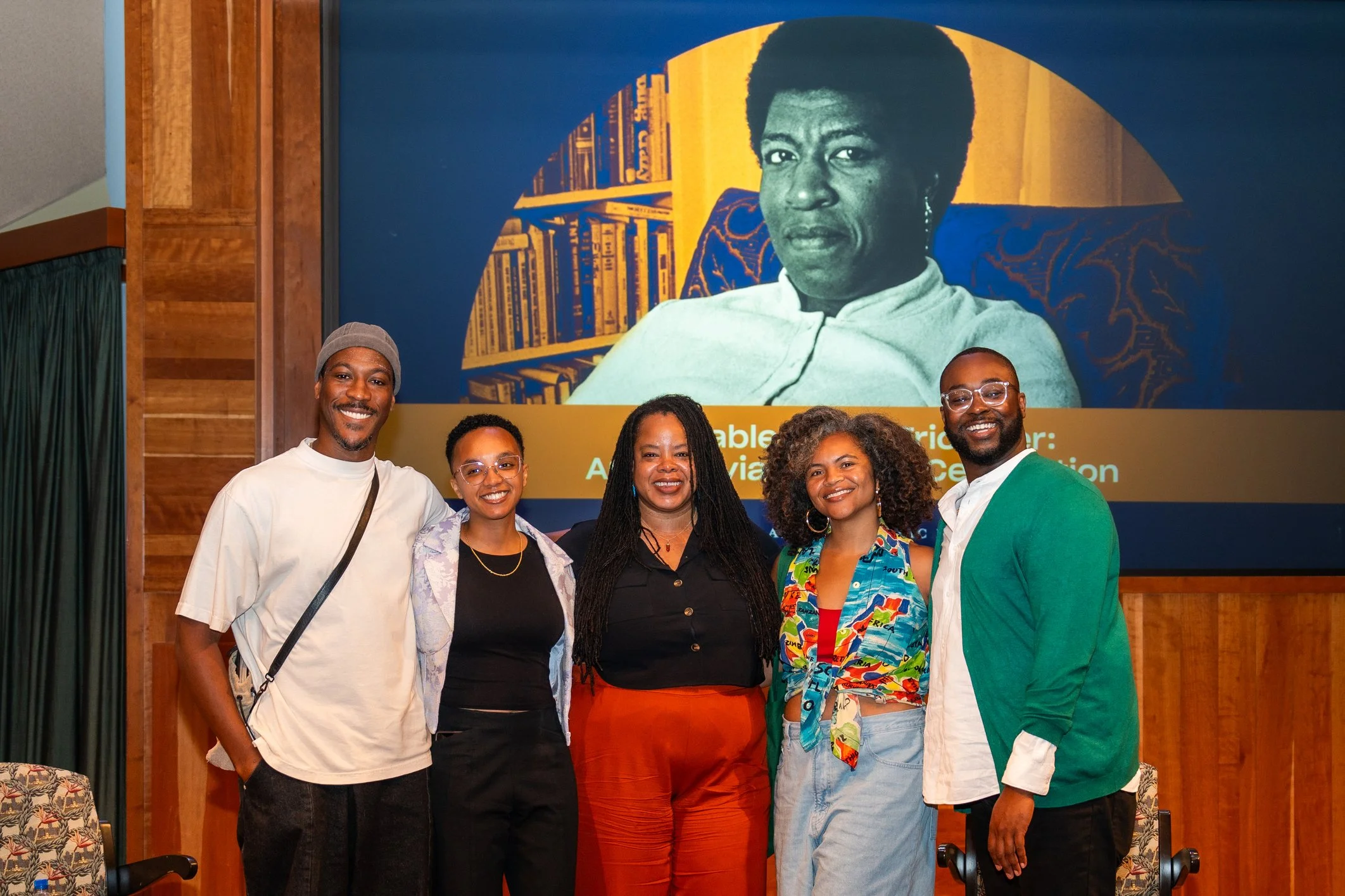
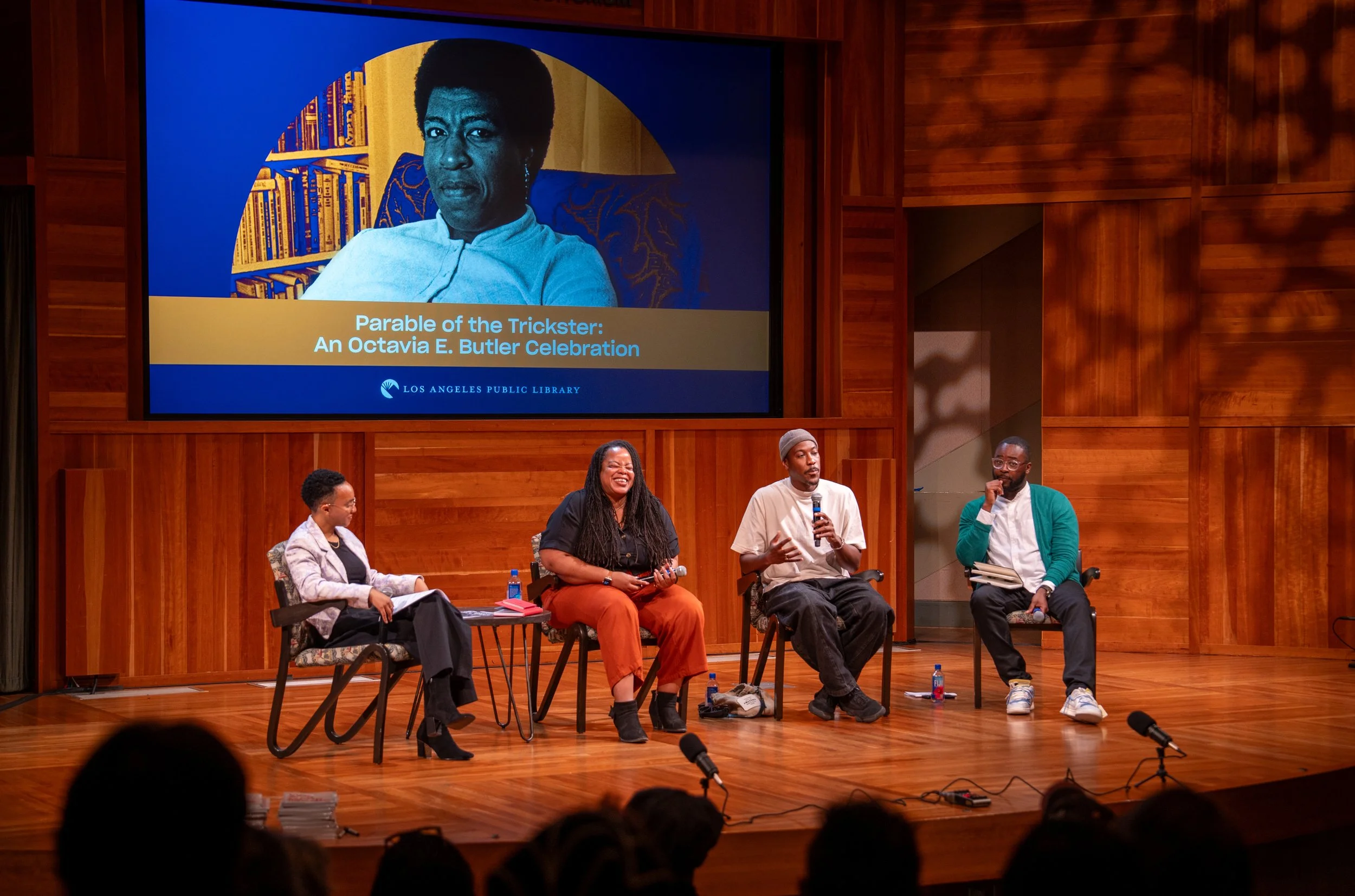
That experience fundamentally shaped the conversation we would later have inside the Taper Auditorium. Alongside Schessa Garbutt, Dr. Tamisha Tyler, and Kevin Bernard Moultrie Daye, we reflected on Butler's unfinished work not as something lacking but as something generative. Parable of the Trickster remains unwritten, yet its absence continues to invite new questions about community, adaptation, spirituality, ecology, and the futures we are responsible for building together.
What made the day especially meaningful, however, extended beyond the panel itself.
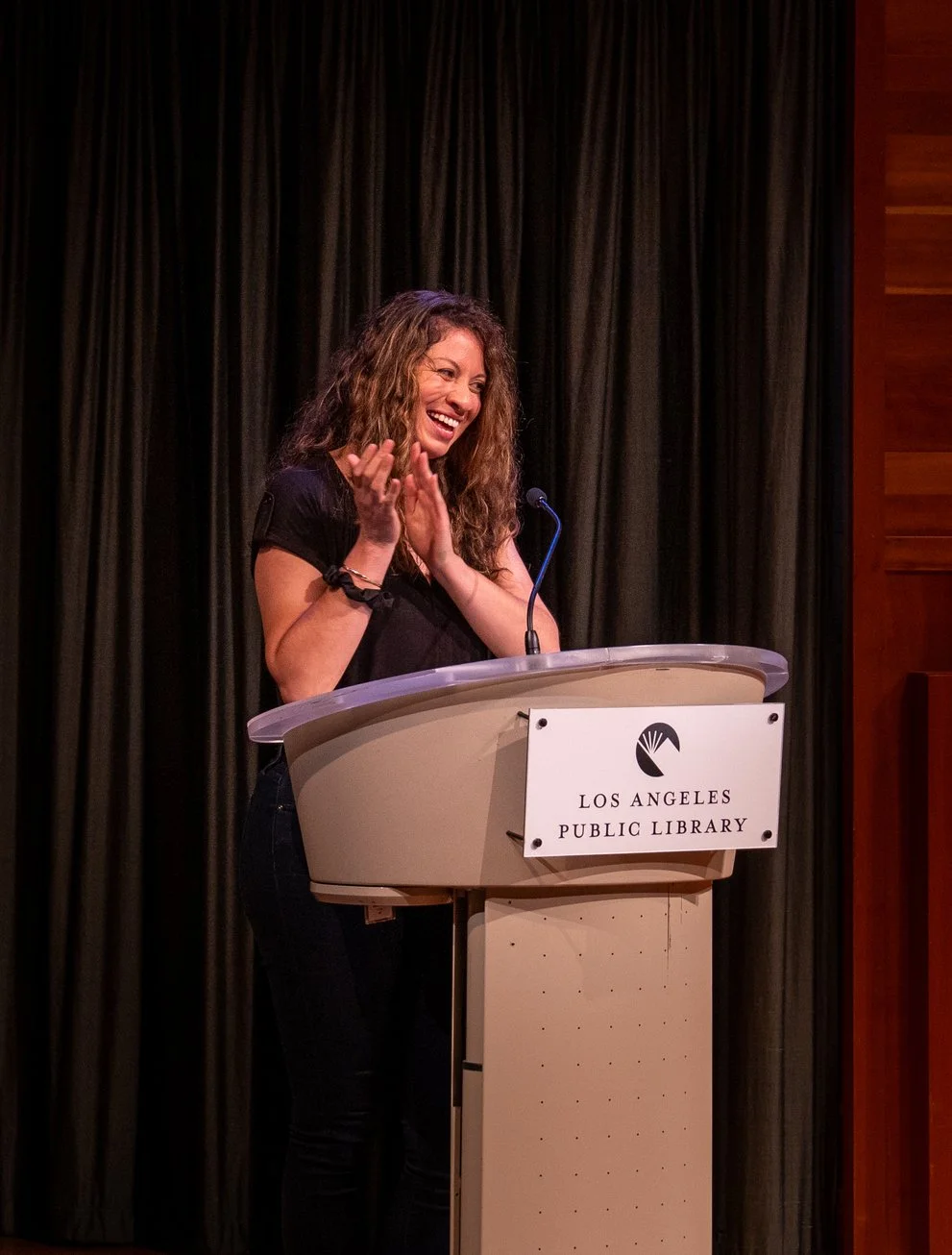
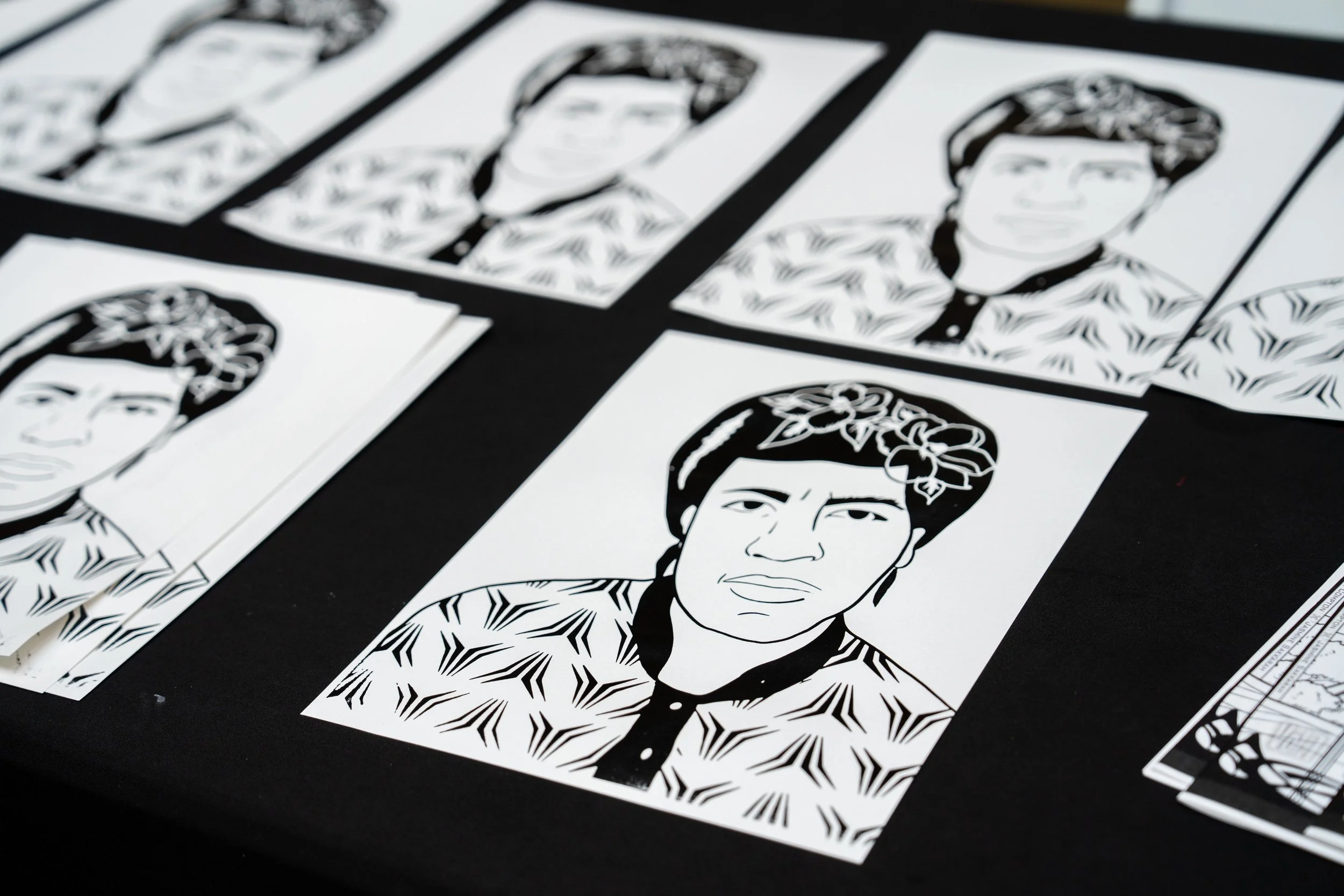
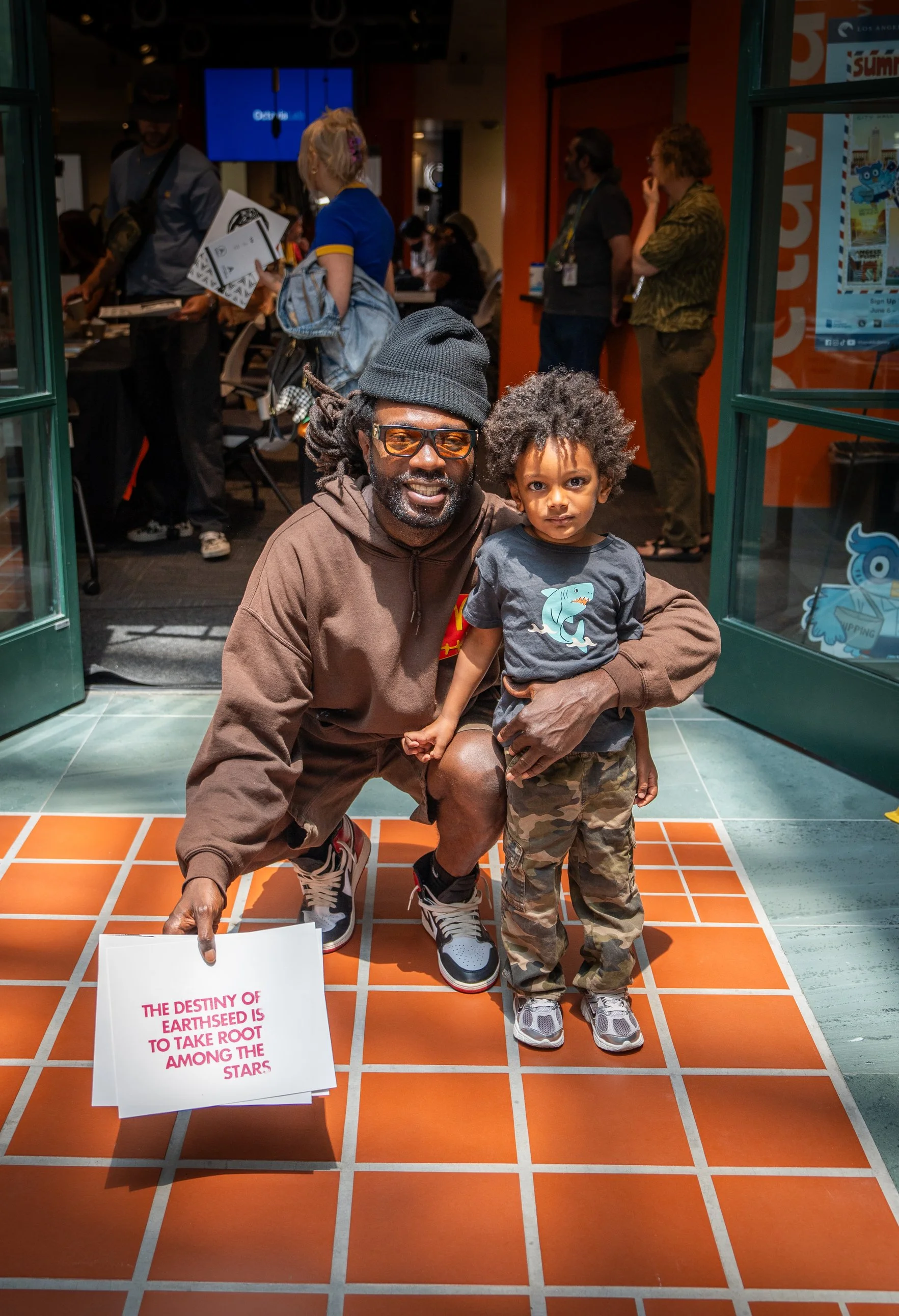
Throughout the Central Library, Butler's legacy came alive through screen-printing workshops with Color Compton, tabletop role-playing inside the Octavia Lab, and interactive art-making inspired by her life and imagination. Rather than positioning Butler as an author to be remembered, the celebration invited participants to inhabit her ideas—to imagine, create, and speculate alongside one another.
This was more than a literary celebration.
It was an exercise in civic imagination.
At NOMMO, we believe this is one of the most important roles cultural institutions can play. Museums, libraries, and archives are not simply repositories of knowledge; they are spaces where communities gather to make meaning together. The archive is not the end of a story, but the beginning of a conversation.
Every public program begins long before the audience arrives. It begins with careful research, thoughtful interpretation, and a willingness to listen before speaking. Research, then, becomes more than preparation.
It becomes a form of respect.
As cultural strategists, curators, and public historians, our responsibility is not only to preserve Black intellectual traditions, but to activate them—to create opportunities for communities to encounter these ideas in ways that are participatory, interdisciplinary, and alive.
Because every archive holds more than memory.
It holds possibility.